
 English
 Thai
Thai Bahasa
 Español
 Deutsch
 Chinese
 English
 Arabic
 Portuguese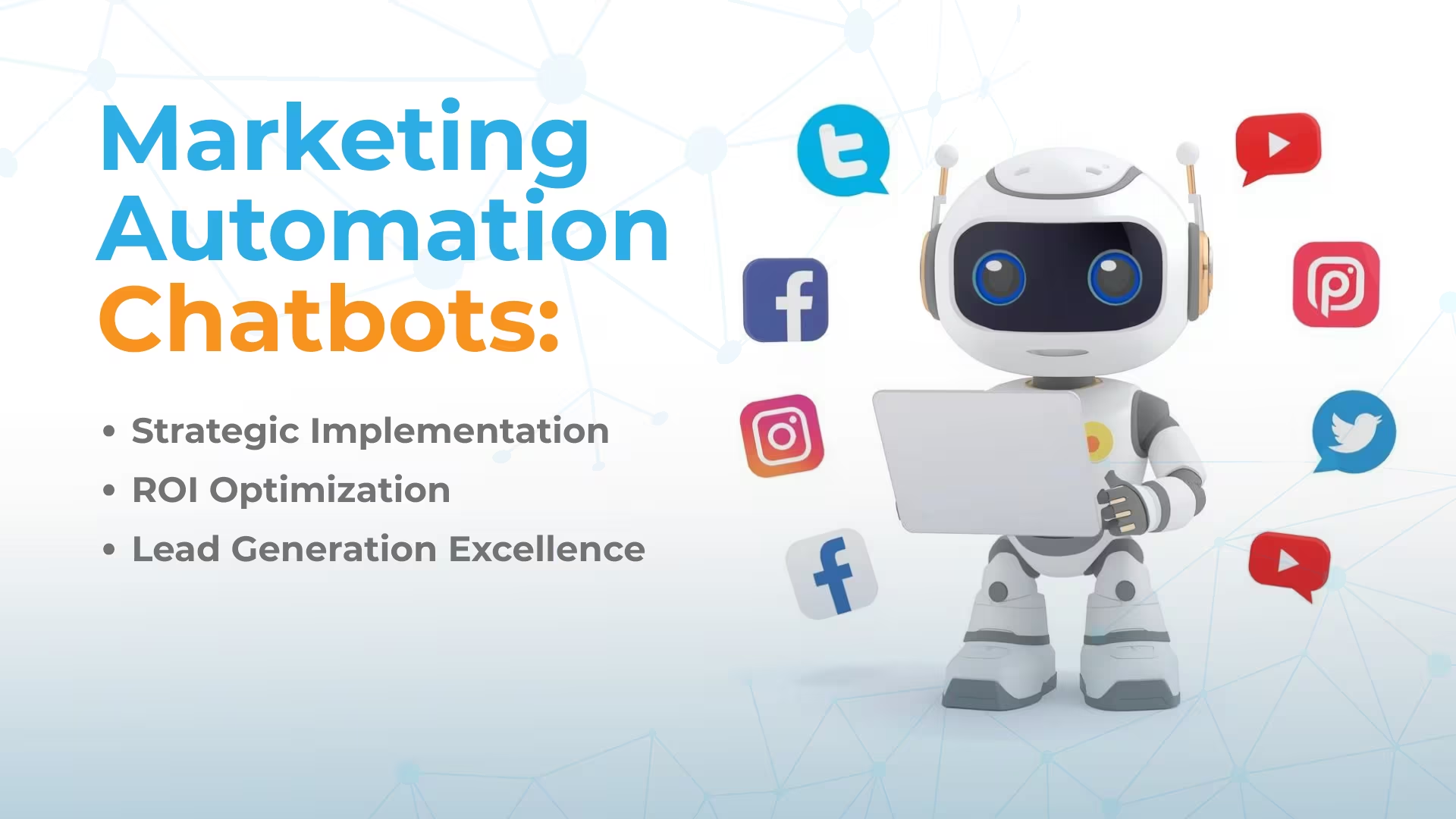
Marketing automation chatbots have evolved from basic scripted responders into sophisticated AI-powered systems that drive measurable business outcomes. These intelligent virtual agents operate continuously, engaging prospects across multiple touchpoints, qualifying leads through dynamic conversations, and delivering personalized experiences that convert casual visitors into qualified opportunities.
Understanding marketing automation chatbots
A marketing automation chatbot is an AI-driven conversational interface that handles complex marketing workflows while maintaining natural dialogue with users. Unlike rigid rule-based bots, modern marketing chatbots leverage natural language processing, machine learning, and CRM integration to adapt responses based on customer data, behavioral signals, and conversation context. They execute multiple functions simultaneously—qualifying leads, scheduling appointments, recommending products, processing transactions, and capturing customer intelligence—all while maintaining engagement quality that rivals human interactions.
(horizontal format)
In digital-first business environments, these chatbots handle high-volume customer interactions without compromising response speed or personalization. By automating repetitive marketing tasks, they free human teams to focus on strategic initiatives like campaign planning, content creation, and relationship building with high-value accounts. The continuous data collection from chatbot interactions provides real-time insights into customer preferences, pain points, and buying intent, enabling businesses to refine targeting and messaging strategies dynamically.
Core use cases for marketing automation
Automated lead qualification and scoring
Marketing automation chatbots excel at qualifying leads through intelligent conversation flows that assess prospect fit and buying intent. Rather than static forms that capture surface-level contact details, advanced chatbots conduct natural dialogues that reveal budget parameters, timeline requirements, decision-making authority, and specific business challenges. Each response feeds into a scoring algorithm that ranks leads by quality, automatically routing high-potential prospects to sales teams while nurturing lower-priority contacts with relevant content.
For example, a B2B software chatbot might ask about company size, current technology stack, implementation timeline, and budget range—questions that would feel intrusive in a traditional form but flow naturally in conversation. The bot scores each lead in real time and either books a demo with sales for qualified prospects or delivers educational content for those still in research mode.
(horizontal format)
Real-time quote generation and pricing automation
Modern chatbots streamline quote generation by collecting necessary information through conversational interfaces and calculating pricing instantly based on user inputs. This automation reduces sales team workload while providing customers immediate transparency on costs, removing a major friction point in the buying journey. Industries like insurance, SaaS, and professional services benefit significantly from automated quoting, where variables like coverage level, user count, or project scope directly influence pricing.
Intelligent appointment scheduling and calendar management
Chatbots have transformed appointment booking by integrating with calendar systems to check availability in real time, suggest alternative slots based on preferences, and manage confirmations automatically. This eliminates the time-consuming back-and-forth of manual scheduling and reduces no-shows through automated reminders sent via email or SMS. For service businesses, medical practices, and consultancies, this automation directly impacts revenue by maximizing calendar utilization and reducing administrative overhead.
Loyalty program management and retention automation
AI chatbots enhance loyalty program engagement by providing instant access to point balances, reward catalogs, and redemption options through conversational interfaces. They proactively notify customers about expiring points, suggest personalized rewards based on purchase history, and guide users through redemption processes. This automation strengthens customer relationships while reducing support costs, as members self-serve most loyalty-related queries without human intervention.
Interactive quizzes and product recommendation engines
Quiz-based chatbots combine engagement with data collection, using interactive assessments to segment audiences, gather preference data, and deliver personalized product recommendations. These conversational quizzes achieve higher completion rates than traditional forms because they feel less like data entry and more like helpful guidance. Retail brands use skincare assessment quizzes, fitness brands deploy workout preference surveys, and B2B companies create maturity assessments—all designed to qualify leads while providing immediate value.
Contest administration and survey automation
Chatbots make contest and survey execution more engaging and efficient by explaining rules conversationally, collecting entries with validation, verifying eligibility automatically, and notifying winners instantly. For surveys, they ask adaptive questions based on previous responses, maintaining higher completion rates through a conversational approach that feels less rigid than traditional forms.
AI-powered shopping assistants and conversational commerce
Shopping assistant chatbots process natural language queries to filter product catalogs, compare options, suggest complementary items, and even complete transactions within the chat interface. They deliver personalized recommendations by analyzing browsing history, past purchases, and explicitly stated preferences, creating a guided shopping experience that increases average order value and reduces decision fatigue. Apparel brands use style quiz chatbots, electronics retailers deploy specification comparison bots, and subscription services implement preference-matching assistants—all designed to accelerate purchase decisions.
Strategic implementation framework
Platform selection criteria
Choosing the right chatbot platform requires evaluating ease of use, integration ecosystem, pricing model, AI capabilities, and deployment flexibility. Enterprise marketing teams prioritize platforms with native AI integrations, robust APIs for custom workflows, omnichannel deployment options, and self-hosting capabilities for data sovereignty. Considerations include whether the platform offers visual conversation builders, supports multi-language interactions, provides analytics dashboards, and integrates seamlessly with existing CRM and marketing automation tools.
Conversation design and message optimization
Effective chatbot conversations require strategic content design that balances information gathering with user experience. Best practices include keeping individual messages concise (under 140 characters), using progressive disclosure to avoid overwhelming users, incorporating personality that matches brand voice, and employing visual elements like buttons and quick replies to guide interactions. Conversation flows should feel natural rather than interrogative, using conditional logic to adapt based on responses and context.
Omnichannel deployment and social integration
Marketing automation chatbots deliver maximum value when deployed across multiple customer touchpoints—website, mobile app, WhatsApp, Facebook Messenger, Instagram, and even SMS. Each channel requires customization to match platform norms and user expectations; social media bots should use casual, fast-paced interactions, while website chatbots can provide more detailed, structured guidance. Maintaining consistent branding, data synchronization, and seamless handoffs between channels ensures cohesive customer experiences regardless of entry point.
Integration with marketing technology stack
Successful chatbot implementation depends on deep integration with existing tools. CRM integration enables real-time customer record updates, lead scoring synchronization, and access to historical interaction data for personalization. Marketing automation platform connections trigger automated email follow-ups, segment contacts based on chatbot interactions, and track multi-touch attribution. Payment processor integrations enable transactional capabilities, analytics tool connections provide performance visibility, and webhook notifications enable custom workflows with proprietary systems.
Measuring ROI and performance optimization
Essential metrics and KPIs
Effective chatbot ROI measurement focuses on metrics aligned with business objectives. Conversion rate—tracking how many interactions lead to desired actions like form submissions, bookings, or purchases—serves as the primary success indicator. Engagement metrics including conversation completion rate, average messages per session, and time to resolution reveal conversation quality and user satisfaction. Cost savings calculations account for reduced customer service hours, accelerated lead qualification, and decreased customer acquisition costs through improved conversion efficiency.
ROI calculation methodology
Calculate marketing chatbot ROI by comparing total returns against total investment. Investment includes platform subscription costs, implementation time, ongoing maintenance, training expenses, and integration development. Returns encompass revenue from chatbot-qualified leads, labor costs avoided through automation, conversion rate improvements from personalization, and customer lifetime value increases from enhanced engagement. The standard formula—((Total Returns – Total Investment) / Total Investment) × 100—provides ROI as a percentage, though sophisticated analyses also track payback period and contribution to pipeline velocity.
Real-world performance benchmarks
Organizations implementing marketing automation chatbots report significant measurable improvements across key metrics. Lead generation chatbots typically capture 30-50% more qualified leads compared to static forms, while reducing cost-per-lead by 20-40% through automated qualification. E-commerce chatbots drive 15-30% increases in conversion rates through personalized product recommendations and proactive engagement. Customer service automation through chatbots reduces support costs by 30-50% while maintaining or improving satisfaction scores, as customers appreciate instant responses and 24/7 availability.
Overcoming attribution and measurement challenges
Accurate ROI measurement faces complications when chatbots operate within complex multi-touch customer journeys. Address attribution challenges by implementing unique tracking parameters for chatbot interactions, integrating with analytics platforms like Google Analytics for full-funnel visibility, and establishing clear definitions for chatbot-influenced versus chatbot-sourced conversions. Data quality issues from incomplete conversations or bot-to-human handoffs require robust tracking mechanisms, conversation logging systems, and clear success criteria that account for partial interactions that still move prospects forward.
Best practices for marketing automation excellence
Advanced personalization strategies
Effective personalization extends beyond using a customer’s name—it requires leveraging behavioral data, preference signals, and contextual information to tailor entire conversation flows. Implement dynamic conversations that reference previous interactions, adjust recommendations based on browsing history, and adapt messaging tone based on customer segment or industry. Use conditional logic to create branching paths where B2B prospects receive different conversation flows than B2C customers, returning visitors see different messaging than first-time guests, and high-value accounts trigger different engagement tactics than standard leads.
Strategic trigger timing and behavioral engagement
Chatbot engagement effectiveness depends heavily on timing and context. Deploy behavior-based triggers including time-on-page thresholds, scroll depth indicators, exit-intent detection, and cart abandonment signals to initiate conversations at high-intent moments. Implement progressive engagement models where initial interactions remain subtle and simple, gradually introducing more complex assistance as users demonstrate interest through continued interaction. Analytics reveal optimal engagement windows—when prospects are most receptive—enabling data-driven trigger optimization that balances proactive outreach with user experience.
Continuous testing and optimization
Marketing automation chatbots require systematic testing and iterative refinement. Conduct A/B tests on conversation openings, message phrasing, call-to-action buttons, and conversation flow sequences to identify highest-performing variations. Track completion rates at each conversation stage to pinpoint drop-off points that indicate friction or confusion. Regularly analyze conversation transcripts to identify common questions that current flows don’t address adequately, revealing opportunities to expand capabilities and improve response accuracy.
Maintaining conversational quality and human authenticity
Even with extensive automation, conversations must feel natural and genuinely helpful rather than robotic or transactional. Incorporate realistic conversation pacing with deliberate typing indicators that mimic human response patterns. Infuse brand personality through voice and tone that matches company values while remaining professional and accessible. Design conversation flows that acknowledge emotions, adapt to frustration signals, and provide empathetic responses when users express confusion or dissatisfaction. Establish clear escalation paths to human agents for complex issues, emotionally charged situations, or when customers explicitly request human assistance.
Marketing automation chatbots represent a fundamental shift in how businesses scale customer interactions while maintaining personalization and quality. As AI technology advances, organizations that master strategic chatbot implementation will gain significant competitive advantages through improved conversion efficiency, reduced customer acquisition costs, and enhanced customer experiences across the entire buyer journey.
(horizontal format)